


Did you know that Møns Klint and the hills behind it form a real small mountain range?
Our world heritage
Dictionary
Are you unsure about the terms?
Here we explain what they mean.
Glacial
Something that has its origins in ice – or in glaciers and their movements.
Tectonics
Two plates that collide, causing one to fold up (like a mountain range).
Glacial tectonics
A sheet of ice that collides with a sheet of rock, causing a mountain range to fold up.
Glacial tectonics is generally much less known than plate tectonics.
Plate tectonics
Where two continental plates collide, causing a mountain range to fold up.
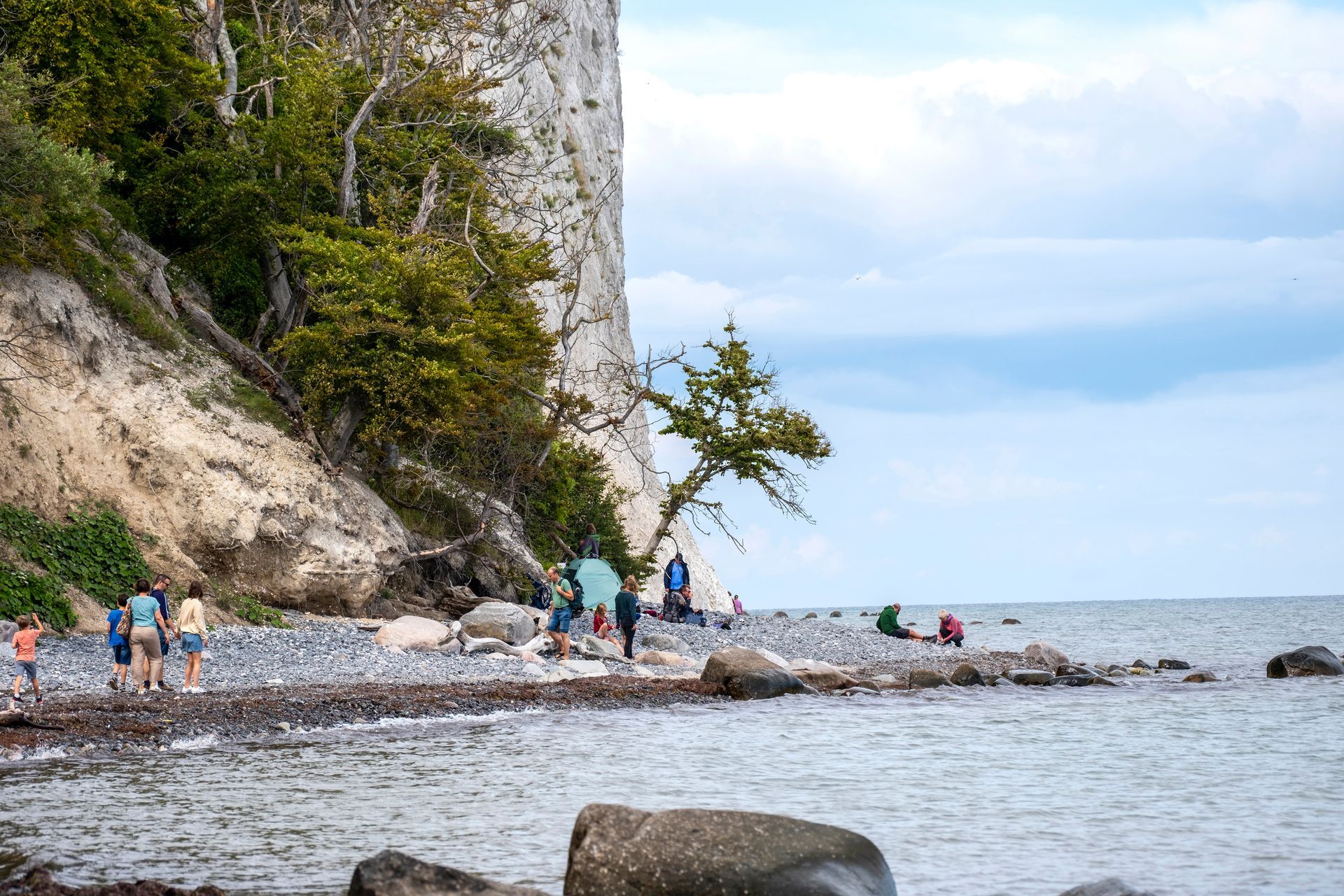
Møns Klint is the best place in the world to see a glacial tectonic complex
The outstanding universal value of the cliff
A glacial tectonic complex is a hilly landscape that has been folded up by glaciers, in the same way that a mountain range is folded up when two continental plates collide.
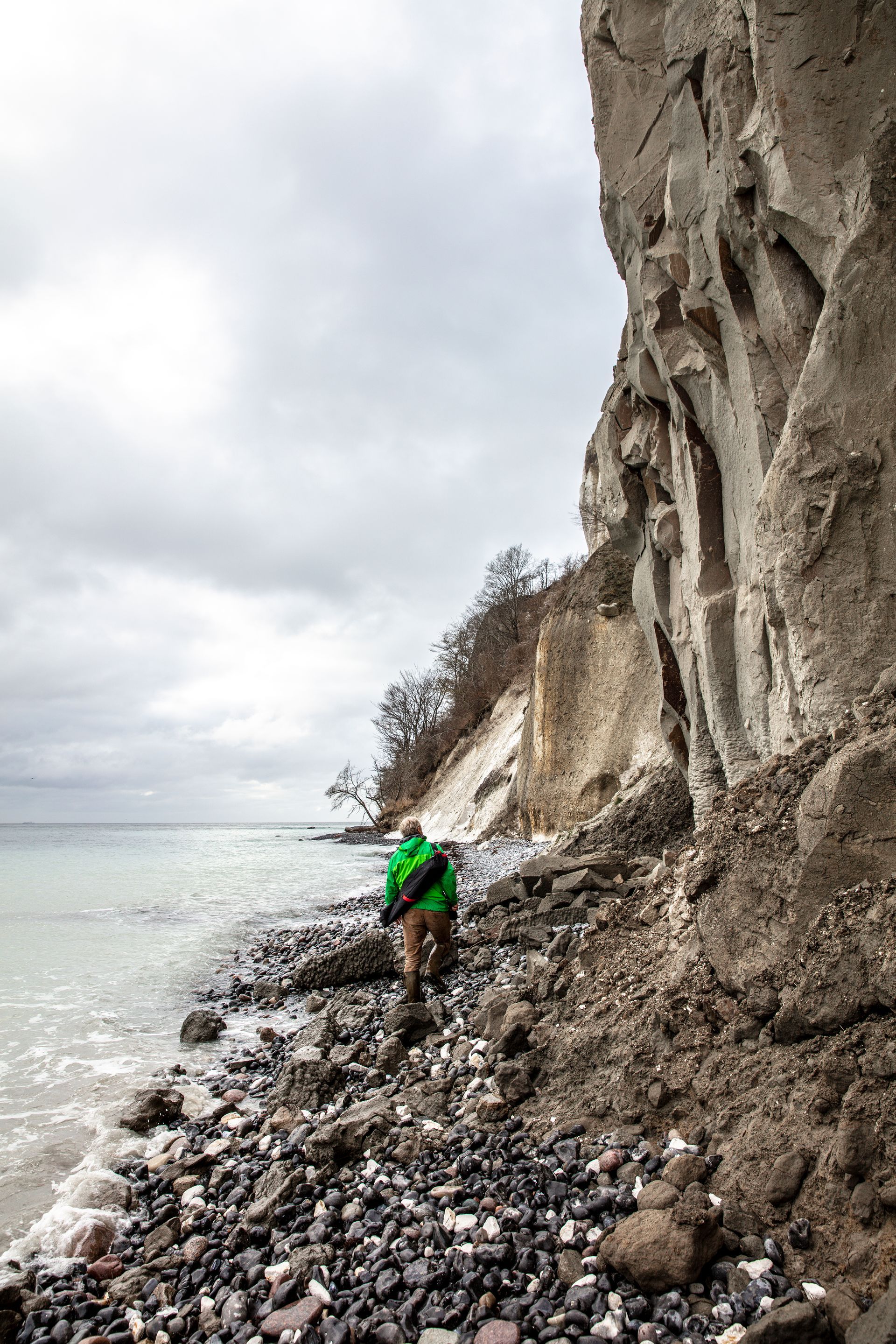
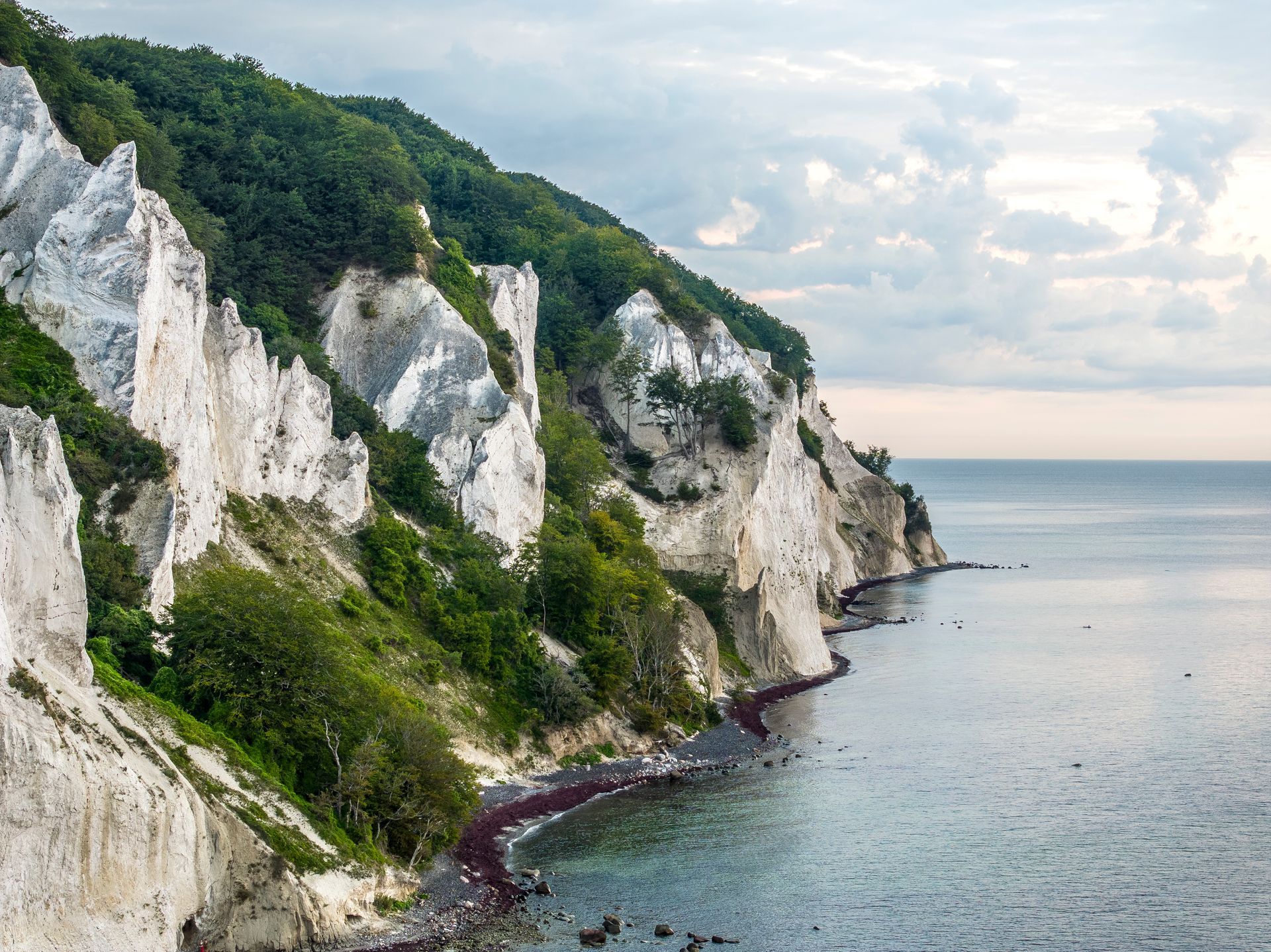
The cliff itself is a large and spectacular testimony to how this folding process took place, as the cliff profile forms a cross-section directly into the hills behind it. It thus acts as a window into the geological structures, showing how and when they were folded – and it is this unique insight that constitutes the cliff's 'outstanding universal value'.
Møns Klint therefore also has a very high research value, and has played a key role in the history of science – in terms of understanding that there have been ice ages at all, and how ice ages have affected the globe.
The geographical area
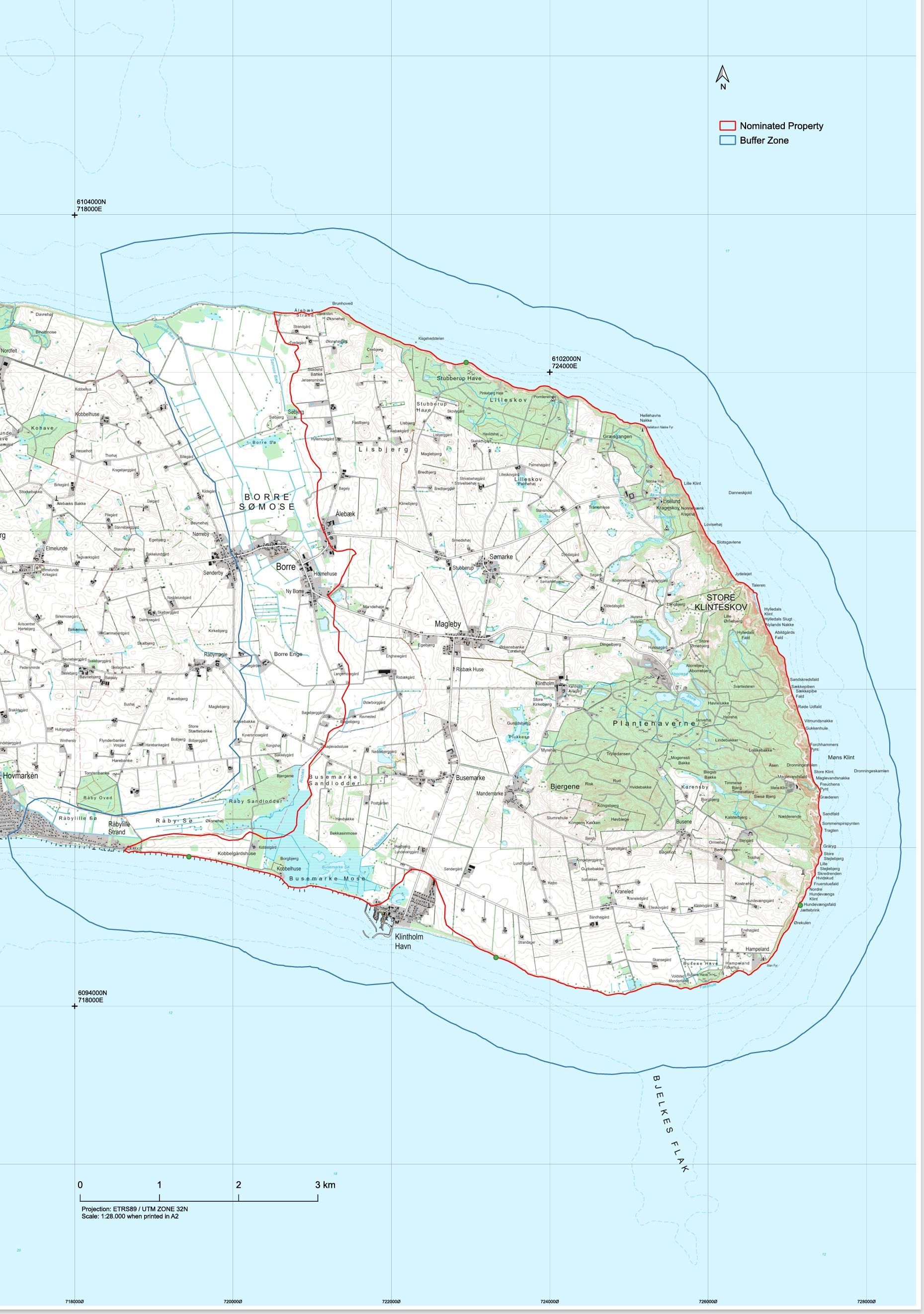
The entire island of Høje Møn has been designated a UNESCO World Heritage Site because the entire area is influenced by the glaciers that have pushed up the hills and cliffs - and shaped the landscape.
When you move from Borre and eastward, it is clear that the area 'rises' before you, and from there you move into the world heritage site, whose border follows the geological contours.
Here you will find rolling hills, limestone grasslands, beech forests and dramatic cliff views.