


UNESCO is the United Nations Educational, Scientific,
culture and communication.
What is UNESCO?
World Heritage Convention
The organization was established after World War II, and its purpose is to promote peace and international cooperation through the exchange of knowledge, education, culture and research.
The UNESCO World Heritage Convention (1972) is an international treaty that obliges member states to identify, protect and conserve cultural and natural heritage of outstanding universal value for all humanity.
The Convention is based on the principle that certain places constitute such an exceptional shared heritage that they must be protected, regardless of their geographical location.
What is UNESCO World Heritage?
The video tells in two minutes the background to UNESCO's creation and development over the years, and how our world heritage is selected.
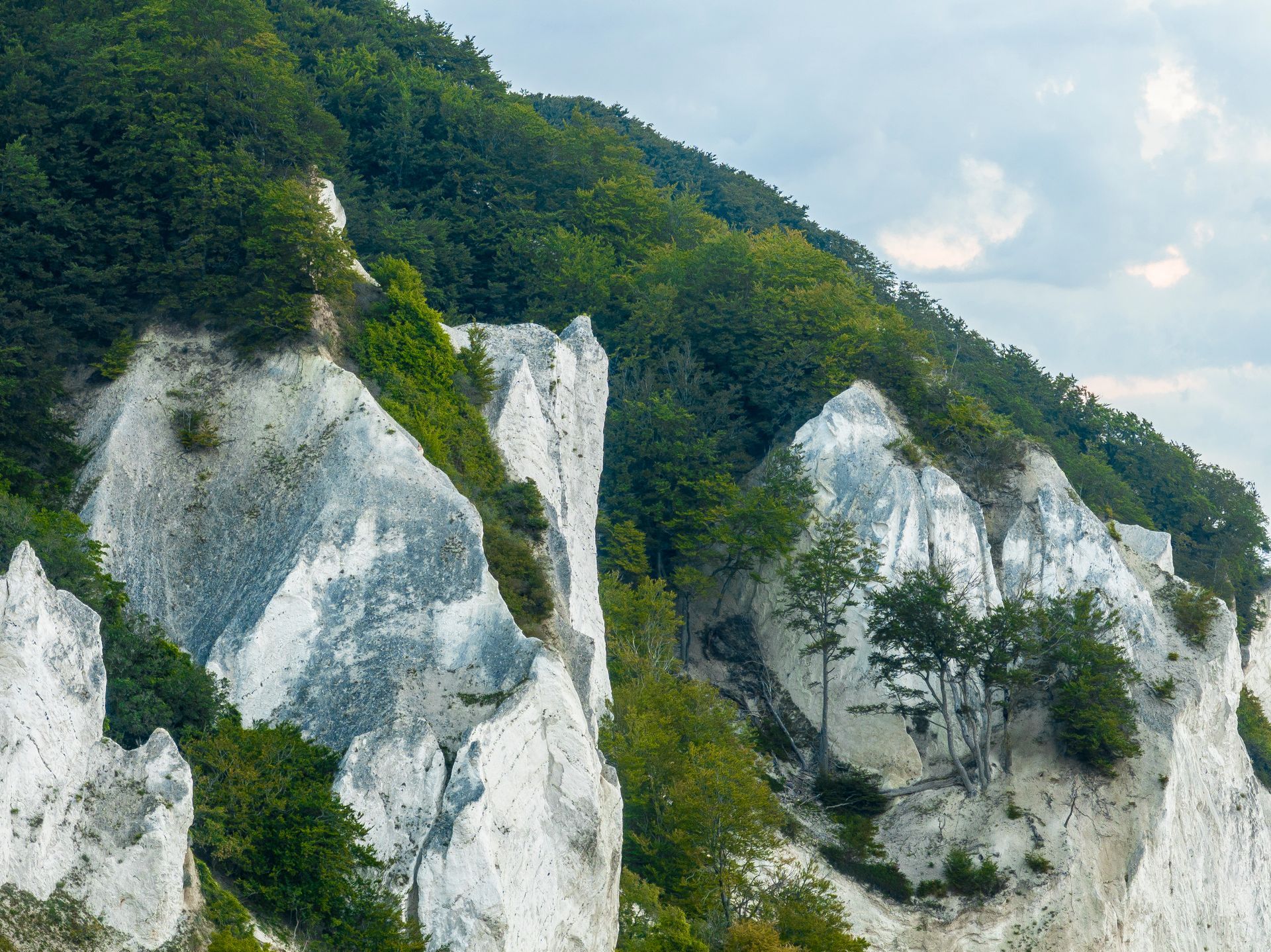
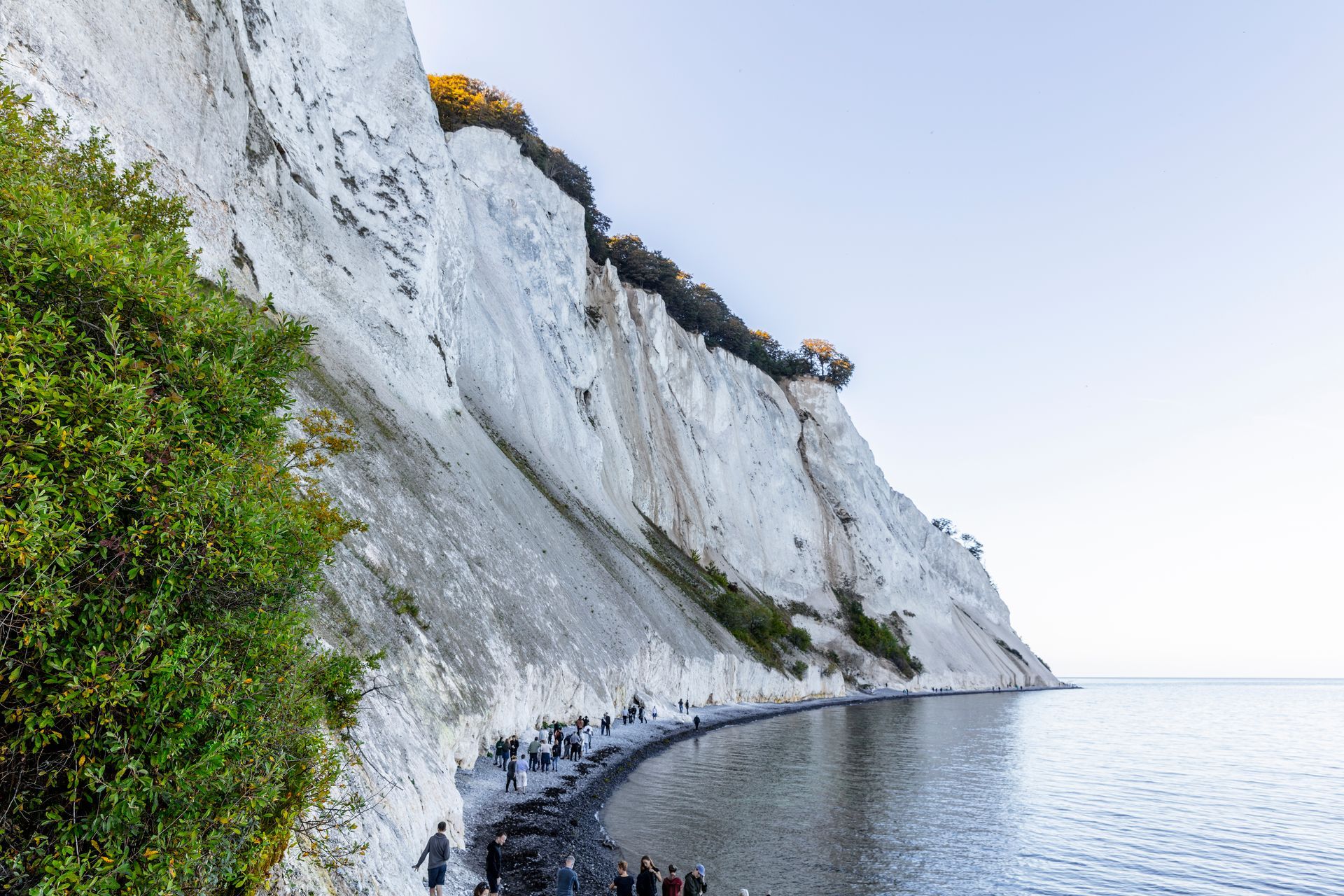
Møns Klint has been designated as a geological world heritage site, and is thus a natural heritage site.
World Heritage List
Møns Klint has been designated as a geological world heritage site, and is thus a natural heritage site.
To be included on the World Heritage List, at least one of 10 criteria must be met, of which 1-6 are criteria for cultural heritage, 7 is the aesthetic criterion and 8-10 are criteria for natural heritage.
You can be appointed to both cultural and natural heritage (mixed), and you can also share an appointment across several countries (transnational).
1248
There are 1248 sites on the World Heritage List (2025), most of which are cultural heritage.
235
Only 235 World Heritage sites are (as of 2025) natural heritage.
90
Of these, only 90 have been designated on the geological criterion.
24
Only 24 are appointed in geology alone.
Møns Klint is therefore a 'rarity' – along with Stevns Klint and the Jurassic Coast in England, which are the only other chalk cliffs on the list.
The five C's
The Convention
The convention in English consists of the following five Cs.
Credibility
Credibility / Trustworthiness
World Heritage sites should be managed in a way that is consistent with UNESCO's values and preserves their integrity and authenticity. In practice, this can mean striving to incorporate the UN's Sustainable Development Goals into both operations and strategic planning, and that development initiatives always take into account both the unique values of the World Heritage site and the more holistic connections with the environment and local communities.
Communication
Communication
Communication is important both internally in relation to the various actors and local communities – but also in relation to communicating the unique values to the rest of the world, as part of UNESCO's ideal of enlightenment and education. At Møns Klint we have a special responsibility to communicate 'glacial tectonics' – since it is the best place in the world to see a glacier-folded (glacial tectonic) landscape.
Capacity-building
Capacity building
In connection with a World Heritage designation, it is recommended to strengthen both the professional and administrative capacities so that knowledge of the site can be disseminated - both locally and globally, and so that 'humanity' can learn more, and thus understand and take better care of its unique values. Both research and dissemination are central in this context, and can ultimately contribute to optimizing management and protection.
Conservation
Protection / Conservation
World Heritage is defined as having such an outstanding universal value that it should be protected for all humanity. It is called 'Outstanding Universal Value' (OUV). Therefore, protection and conservation are also central to the convention, so that we do not lose the unique values. The entire area around Møns Klint is protected by a number of protections and legislation, which means that the area has a good state of conservation.
Community
Local community
It is essential that World Heritage sites have local support and that the designations contribute positively to the local communities that surround them. Therefore, it is also of great importance to establish collaborative networks across institutions, competencies and social classes – so that everyone can contribute and be heard. On Møn we have ambassadors affiliated with the Biosphere Programme, in addition to several business networks, local forums and advisory bodies – including the World Heritage Council.