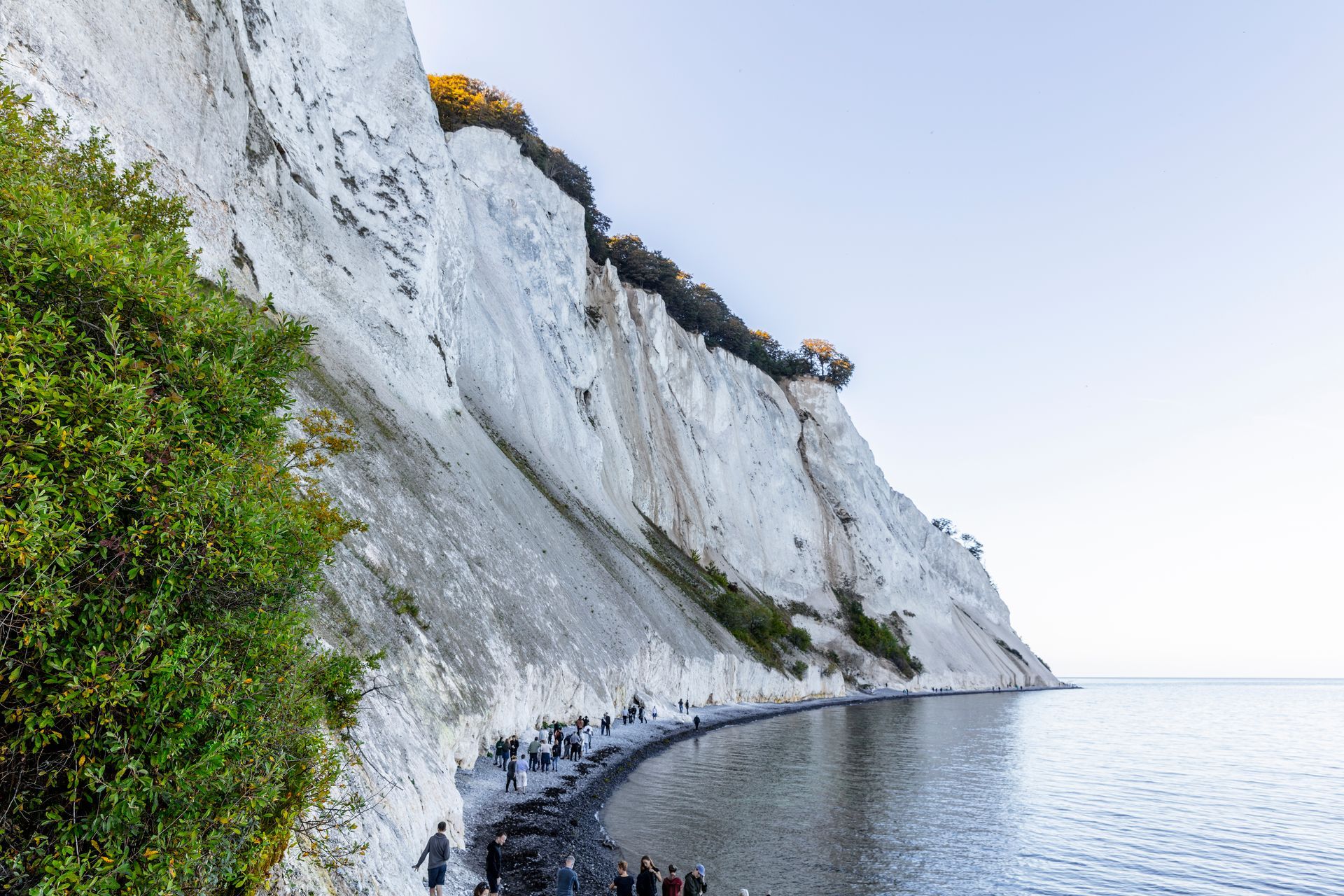




Møns Klint is a fascinating geological site from which we can learn an infinite amount.
Learn more
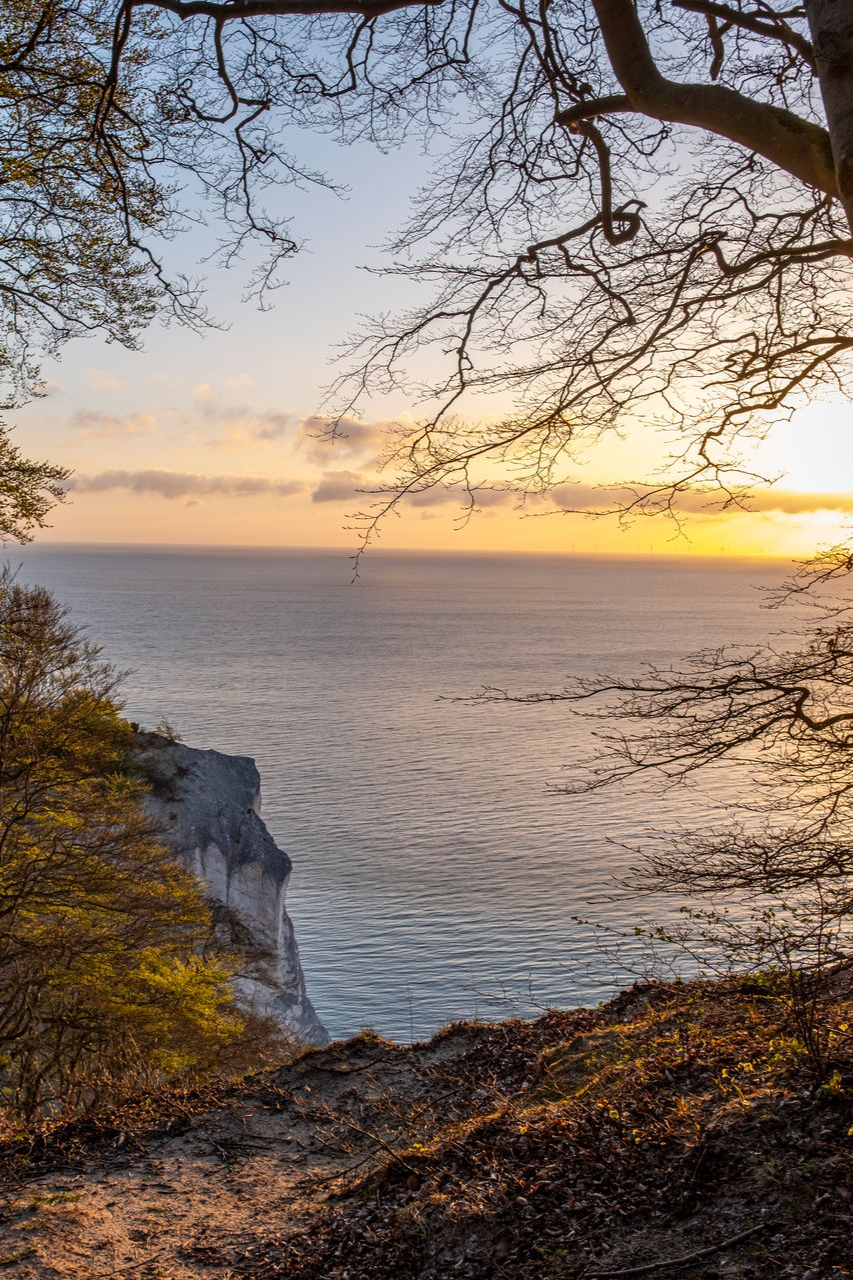
For nerds and curious people
Møns Klint is also valuable for research, and has played an important role in the history of science. Up until the 19th century, for example, it was not known that there had been ice ages on Earth, nor that ice could also help shape landscapes.
If you want to delve deeper into science, geology or the history of science, you can find relevant documents from the application process below.
Become Møns Klint Bezzerwizzer!
Test your knowledge
Do you live in the area around Møns Klint or are you considering moving here? Then you might want to be able to impress friends and family with a little unique knowledge about the cliff and the world heritage site - and why the area is so unique that it should be 'protected for humanity'?
Why has Møns Klint become a UNESCO World Heritage Site?
1.
It has the best fossils of water lilies in the world.
2.
It is the world's most beautiful white chalk cliff.
3.
It's the best place in the world to see a glacier-shoved landscape
SEE ANSWERS
3.
It's the best place in the world to see a glacier-shoved landscape
How have glaciers from the last ice age helped shape the landscapes on Høje Møn?
1.
The glaciers have pushed the chalk plates up on top of each other, like a bulldozer.
2.
As the ice melted, the meltwater cut into the landscape, creating valleys and hills.
3.
The glacier has been lying on top of the landscape and flattening it completely.
SEE ANSWERS
1.
The glaciers have pushed the chalk plates up on top of each other, like a bulldozer.
When was the chalk in Møns Klint formed?
1.
During the last ice age
2.
In the Cretaceous period 70 million years ago
3.
In the late Stone Age
SEE ANSWERS
2.
In the Cretaceous period 70 million years ago
How is the geology related to the biodiversity on Høje Møn?
1.
The nutrient-poor limestone soil is good for rare plants and provides high biodiversity.
2.
The lime is so nutrient-poor that it depletes the soil, causing low biodiversity.
3.
Geology and biodiversity have nothing to do with each other
SEE ANSWERS
1.
The nutrient-poor limestone soil is good for rare plants and provides high biodiversity.
Why are there so many ancient burial mounds in the area around Møns Klint?
1.
Because the hilly landscape was good for building burial mounds
2.
Because people in ancient times loved beautiful landscapes
3.
Because the flints from the cliff were a very valuable material
SEE ANSWERS
3.
Because the flints from the cliff were a very valuable material
What technical term describes the process by which glaciers fold up mountains and landscapes?
1.
Alpine mobility
2.
Plate tectonics
3.
Glacial-tectonic
SEE ANSWERS
3.
Glacial tectonics
How large is the glacial-tectonic complex at Møns Klint, which also constitutes the World Heritage Site?
1.
It is made up of the cliff profile and the beach in front
2.
It consists of Møns Klint and the hills of Klinteskoven.
3.
It covers the whole of Høje Møn, from Borrelavningen and eastwards.
SEE ANSWERS
3.
It covers the whole of Høje Møn, from Borrelavningen and eastwards.
Which vulnerable habitat type has received EU support for the Life Orchids project on Østmøn?
1.
The rare beech forest on limestone
2.
The dry limestone grasslands at Høvblege and Hundevæng
3.
The humid Borre Sømose
SEE ANSWERS
2.
The dry limestone grasslands at Høvblege and Hundevæng
The white cliff profile is tall and beautiful, but why is it also valuable to researchers?
1.
It acts as a kind of window to the geological (glaciotectonic) folding
2.
It is so beautiful and dramatic that Golden Age painters painted unique pictures from it.
3.
There are so many fossils in there that we are constantly learning new things about life in the Cretaceous Sea.
SEE ANSWERS
1.
It acts as a kind of window to the geological (glaciotectonic) folding
Why has the area around Møns Klint also had a great importance in the history of science?
1.
Structures in the landscape gave rise to the realization that there had once been ice ages
2.
Medieval scholars believed that the area contained traces of the Flood.
3.
The story of the chalk in the cliff told the story of the birth of Denmark
SEE ANSWERS
1.
Structures in the landscape gave rise to the realization that there had once been ice ages
Material and documents
Read much more about the geology and the basis for designation as a World Heritage Site in the following documents, or visit UNESCO's official page for Møns Klint.
The application folder for UNESCO (2024
The attachment folder for the application (2024)
Supplementary material and cover letter (2025)
Recommendation on 'referral' (2025)